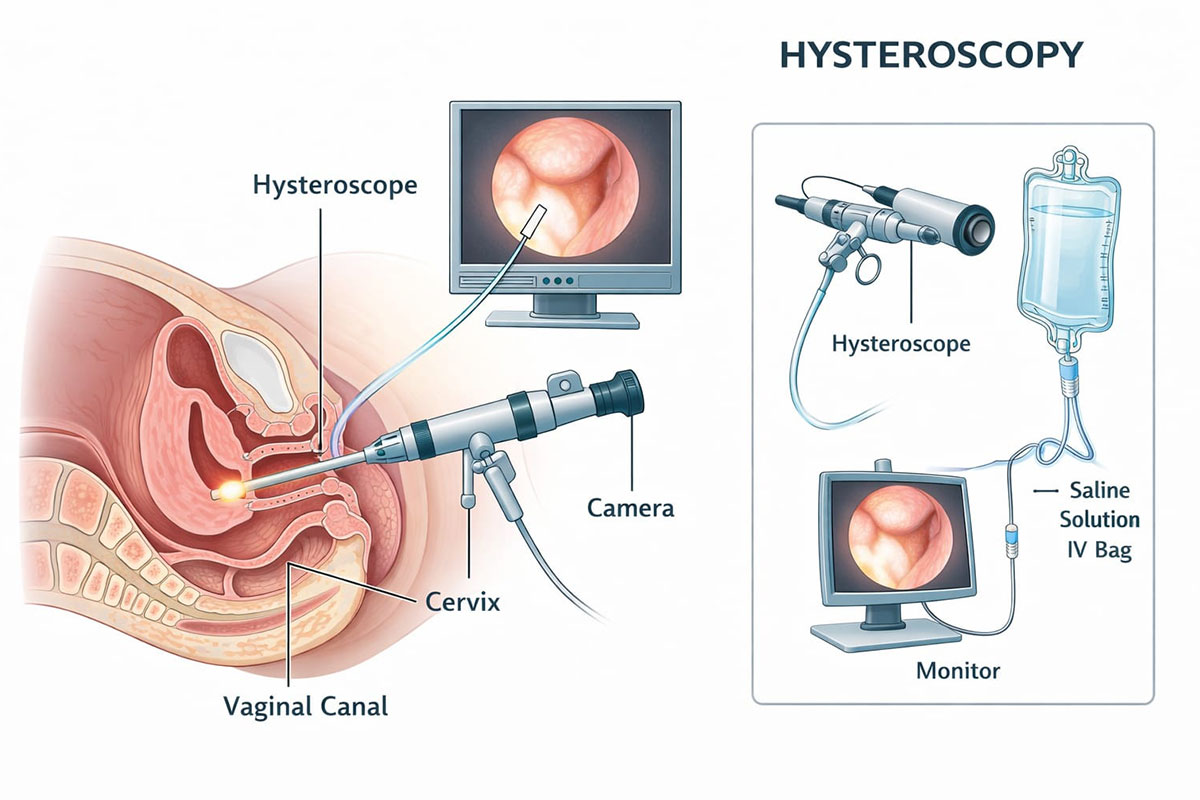
Hysteroscopy
Means visualization of uterine cavity through a long tubular endoscope that helps in diagnosing or operating intrauterine pathologies. Entry of the scope is through natural route of vagina and cervix and water channel is used to distend the uterine cavity using either saline or glycine. No external cut or incision is required and it done under short anesthesia as a daycare procedure. Common indications are-
Abnormal Uterine Bleeding – diagnostic purpose and guided biopsy
Diagnostic /Operative for infertility workup – check for endometrial cavity / endometrium lining / intrauterine adhesions / cornual blockage and cannulization
Operative for Polyp removal / Submucosal fibroid removal / septal resection/removal of IUCD
Laparoscopy
Means visualization of abdominal cavity and pelvis through an endoscope. Entry is through a small key hole type of incision made usually at umbilical region and one or more side ports of less than 1 cm on either side of umbilicus (minimal access surgery). It is done under proper General Anesthesia and usually requires 24 hours admission at hospital.
This procedure is commonly used to operate upon pathologies of uterus, ovaries or tubes. Common indications for doing this surgery are –
- Fibroid uterus
- Adenomyosis
- Endometriosis
- Ovarian cysts
- Infertility
- Malignancies
Fertility Enhancing Surgery
As the name indicates, fertility enhancing surgeries play a crucial role in improving the chances of conception for couples facing reproductive challenges. It is mostly done either by hysteroscopy and/or laparoscopy. These surgical procedures are designed to correct anatomical abnormalities, remove obstructions, and restore the normal functioning of reproductive organs. Common procedures include laparoscopic surgery for treating conditions like endometriosis, fibroids, and ovarian cysts, as well as hysteroscopic surgery to address uterine issues such as polyps, adhesions, or septum. In men, surgeries like varicocelectomy can help improve sperm quality by correcting enlarged veins in the scrotum. These minimally invasive techniques often result in faster recovery, reduced pain, and improved fertility outcomes.
Fertility enhancing surgeries are usually recommended after a thorough evaluation, including imaging tests and hormonal assessments, to identify the underlying cause of infertility. When performed by experienced specialists, these procedures can significantly increase the chances of natural conception or improve the success rates of assisted reproductive techniques like IUI and IVF. It is important for couples to seek timely medical advice and not delay treatment, as age and overall health also impact fertility potential.
A personalized treatment plan, combined with the right surgical intervention, can make a meaningful difference in achieving parenthood. For expert guidance and advanced fertility care, consult Dr. Smita Jain, a trusted infertility specialist known for her expertise in managing complex infertility cases and providing compassionate, patient-centered care.